Written by Jess Holleran, in collaboration with the 2026 Mansfield Training School Memorial and Museum Research Team.
Contact: jessicaholleran20@gmail.com
The University of Connecticut and Mansfield Training School
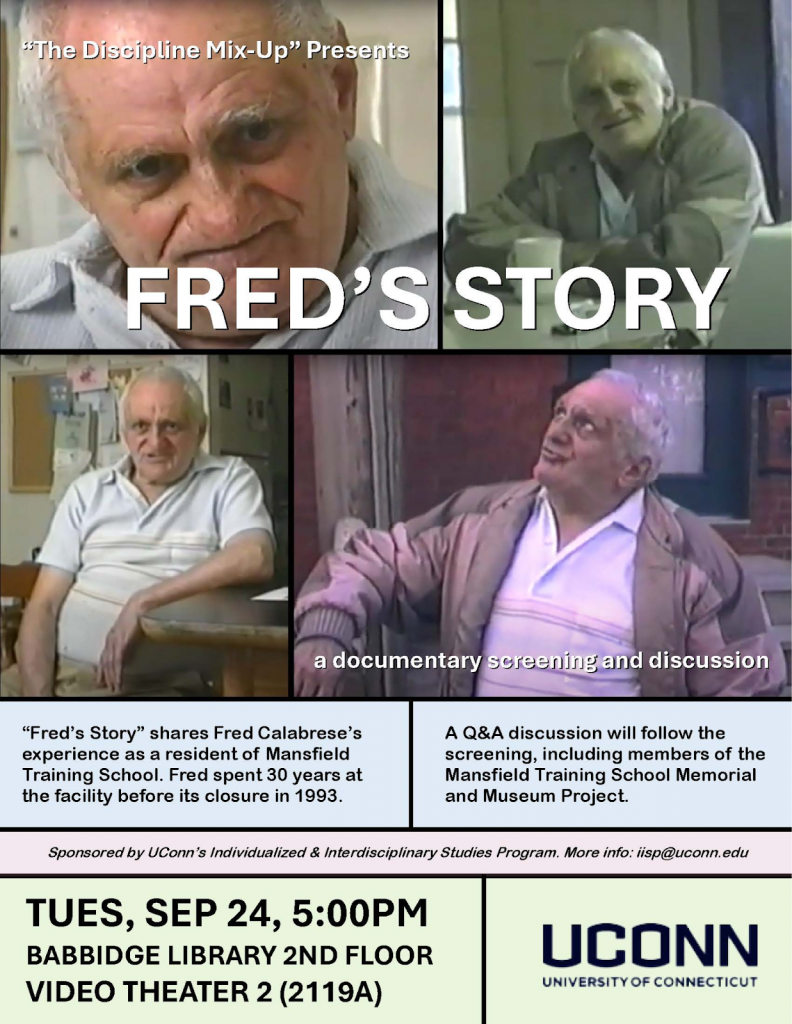
Only 2 miles down the road from the University of Connecticut’s main campus sits the largely abandoned depot campus. It now houses the Puppet Arts Complex for UConn’s puppetry majors; however, for over 100 years this was the home to the Mansfield Training School, an institution that worked in collaboration with UConn to house people with disabilities.
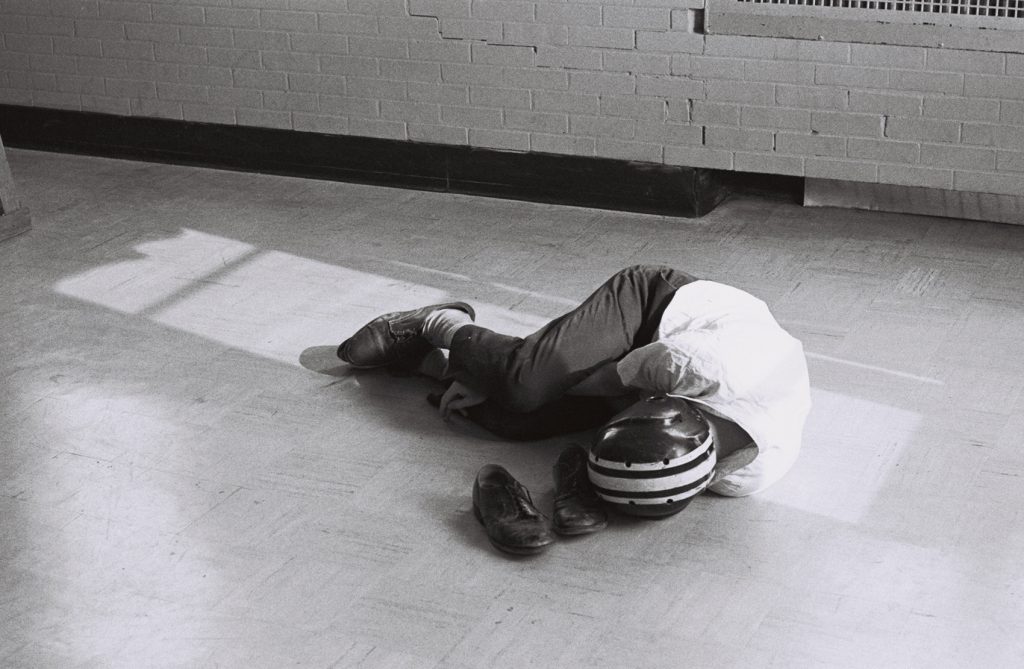
The conditions here were abysmal– residents faced overcrowding, a lack of privacy, and abuse. It’s been documented that, “in one month in 1957, 39 residents spent more than half of each day in restraints,” as just one example of the mistreatment. One former employee at the training school, Daniel O’Leary, recalled “isolation rooms, where residents were locked for days or weeks at a time.” In conversation with Charlotte Meryman, O’Leary also mentioned a boy who “was nearly beaten to death with a baseball bat for dirtying an aide’s uniform in a game.”
In addition to the physical abuse residents faced from staff, residents were subject to countless psychological experiments from UConn faculty. Dr. Betty House Zeaman and her husband, Dr. David Zeaman, “established a laboratory at the Mansfield Training School near the University of Connecticut” where they were able to conduct a multitude of experiments on the residents. One of these studies attempted to teach children to discriminate between stimuli much the same way you train a dog to do a trick, disregarding any human dignity for them.
Additionally, the University of Connecticut itself, not just the faculty members who benefited from using the residents for research projects, demonstrated a disregard for the health and wellbeing of the population at Mansfield. In one letter to UConn’s dairy department, Mansfield Training School reported receiving “orange juice contaminated with bleach” and “unrefrigerated milk,” both of which have the potential to cause serious harm to the residents. UConn’s response to these complaints was to simply re-refrigerate the products, pretending they were new, as if food safety for these consumers was not worth the hassle.
Other Institutions
The Mansfield Training School was not the only institution like this in the United States. Overcrowding remained a constant for a good number of facilities, noted in a collection of photos titled Christmas in Purgatory (1966). In this key photojournalism project, Burton Blatt and Fred Kaplan visited 5 unnamed institutions across New York, taking photographs of the filth and lack of dignity they had seen along the way. By not naming the institutions they visited, they increased the generalizability of what they had seen, rather than letting it be written off as “just a few” in one state. In fact, they believed that “in many other institutions in America [they] could have taken the same pictures– some [they] are sure, even more frightening.”
Following on Blatt’s photojournalism work, in 1972, Geraldo Rivera aired a documentary concerning the conditions at Willowbrook State School in Staten Island, an institution housing many people with developmental disabilities. At Willowbrook both children and adults alike were subjected to extreme overcrowding, experiments, and abuse. In order to even gain enrollment at Willowbrook, parents were forced to give ‘consent’ for their children’s participation in unethical clinical trials– the most notable being in relation to Hepatitis vaccine tests. Due to the existing Hepatitis outbreak, caused by the filth the residents were forced to live in, researchers “injected [children] with the virus itself or made [them] drink chocolate milk mixed with feces from other infected children in order to study their immunity.”
Seven years prior to the 1972 Willowbrook documentary’s release, in 1965, Senator Robert Kennedy visited Willowbrook and witnessed the conditions there. In a press interview he compared Willowbrook to a “snakepit” and noted rooms “less comfortable and cheerful than the cages in which we put animals in the zoo.” Despite the deplorable conditions he had seen and described, the senator later wrote he had “no knowledge of criminal negligence on the part of anyone in the institution” and made no further moves to aid the residents of Willowbrook.
Deinstitutionalization
It was only in 1987, 22 years after Kennedy’s visit, that Willowbrook was shut down. A lawsuit, filed shortly after journalist Geraldo Rivera’s documentary aired, argued that the residents’ 8th and 14th amendment rights were being violated– leading to further regulations for Willowbrook. This investigation meant that the institution was now officially prohibited from using restraints on their residents and required to hire additional “medical, therapeutic, and recreational [staff].” Legally, the institution’s new goal was rehabilitation, rather than just housing. They could not meet these new requirements and finally ceased operations.
This lawsuit inspired many others across the country, including one filed by The Arc Connecticut, formerly known as the CARC, against Gareth Thorne and his Department of Developmental Services, eventually closing the Mansfield Training School in 1993. In CARC vs Thorne, CARC argued it was unethical to keep residents in the institutional setting whilst other community living options were becoming more widely available. They held that “the administration and staff at Mansfield Training School violated their clients’ 1st, 4th, 9th, and 11th amendment rights.” The state sided with CARC, effectively ceasing operations, and much of the land was transitioned to temporary use by correctional facilities and eventually to the University of Connecticut in 1994.
IDEA, The Disability Cliff, and Other Bits of Dialect
Coinciding with deinstitutionalization, the national trend of “[transferring the] mentally disabled” out of institutions to live in their communities, was the independent living movement (ILM), which advocated for allowing individuals with disabilities to live as independently as they are able, provided with what support they might need. Activists pushed Congress to “authorize the establishment of Centers for Independent Living as a Rehabilitation Act amendment,” which they did in 1978. Incrementally, states opened centers that allowed people with disabilities to begin living, or learning the skills to live, as autonomously as they could. Still, these centers were (and still are) not as abundant as the institutions they were replacing, leaving large gaps in support.
In the midst of deinstitutionalization, there was a large push from disability rights advocates for specific legal protections for people with Intellectual and Developmental Disabilities (IDD)– most notably in the sphere of education. In 1975, three years after the Willowbrook documentary (1972), Congress enacted the Education for All Handicapped Children Act (EHA), later renamed in 1990 to the Individuals with Disabilities Education Act (IDEA).
The act overhauled the realm of special education, providing students with the right to free and appropriate public education, and it largely removed the previous apparent need for institutions. With IDEA in 1990, students were provided an Individualized Education Plan (IEP), with specific goal setting designed for each student. By the 2022-23 school year, IDEA was protecting 8 million students and their right to an education– without these legal battles, brought on by the mentioned social movements, many of those individuals would have been facing the same conditions of institutionalization.
However, these services don’t last forever, as they only provide support for individuals aged 3-21. This phenomenon is referred to as the “disability cliff” by many parents and advocates alike. The robust system of supports clearly set out and protected by the law suddenly disappear, the path ahead is uncharted, and many families are left in uncertainty on what the future will look like past the cliff age of 21. Most parents can’t suddenly start working from home fulltime in order to care for their child. If this were to occur, the parents might be challenged in providing specific vocational training to their children due to a lack of resources.
In addition to a lack of accessible programs, the transition to adulthood is noted to be more difficult for people with IDD than people without it. Programs are necessary to support the mental and emotional toll this phase comes with. For many, an IEP includes an ITP, or Individualized Transition Plan, meant to guide students and caregivers to appropriate resources and make a plan for what adulthood may look like. While conceptually sound, in practice ITPs run the risk of being ineffectual due to a lack of practicable resources.
There is a documented history of transition services being difficult to access– either they are fiscally unavailable, have long waiting lists, or are too far away to be practical. Additionally, the field itself is full of acronyms that caregivers need to learn in order to navigate services– IEP, ITP, CTP, PSE, IDD, IDEA, EHA, DNEC, SPIL, CIL, and SILC are just a few common examples of the overly dense and ever changing dialect families are forced to navigate.
Current Options for Connecticut Families
In addition to navigational difficulties, the services provided vary in quality and specificity. Some are meant to develop existing vocational skills instead of introducing them. Others are group homes that vaguely echo institutions of the past. The common denominator to these services is their difficulty of navigation and/or enrollment.
In attempts to ameliorate and alleviate the struggle presented by the disability cliff, every state is required to create and maintain a State Plan for Independent Living (SPIL). This is essentially the budgeting and goals for the Independent Living programs available in each respective state. In Connecticut the SPIL was adopted with a five year plan to establish eight centers across eight geographic regions. This did not happen. Instead, due to funding cuts, only five were created, strained to fulfill the job of the planned eight.
The objective has now shifted to do the best with what funding they have, and to advocate for further funding of existing centers rather than creating any new ones. Mansfield and 37 other towns are served by the Disabilities Network of Eastern Connecticut (DNEC). This structure puts unnecessary stress on the system, leaving too few support systems for too many people. It is simply just not feasible for the DNEC to meet the needs of every single person in the populations they serve. The overburdening on one main institution leads to longer waitlists to gain access to any program a participant might qualify for.
It’s important to note that the faults outlined here with the services in Connecticut are not because of any existing malice on the part of the programs. These factors to inaccessibility derive from a larger struggle of funding from the state. As a parallel to institutionalization, these programs are severely understaffed and underfunded. However, instead of admitting participants regardless of whether or not they have the staff to properly support them, they maintain waitlists, showcasing a need to provide funding and support to these programs.
The Connecticut SPIL also mentions that, due to a lack of reliable funding, in addition to advocating for the existing Centers for Independent Living (CILs), the State Independent Living Council (SILC) should also be looking at “alternative resources to advance independent living in the state.” By exploring other options besides the CILs, they would be able to provide Connecticut families with a wider selection of support, allowing for further autonomy and choice in their futures.
The Role of Universities
States like New York, Virginia, and South Carolina all have alternatives to CILs via colleges and universities. Syracuse, George Mason, and both Clemson and the University of South Carolina have Post-Secondary Education (PSE) programs, specifically designed to remedy some of the gaps in resources for IDD. George Mason, Clemson, and the University of South Carolina are all public schools– receiving state and federal funding– while Syracuse is private, operating on tuition payments and donations.
The Syracuse program, InclusiveU, just recently started the Opening Doors Fund, “ensuring that students with intellectual disability can pursue their college dreams without financial barriers standing in their way.” By limiting fiscal obstacles to their inclusive initiatives, the university is able to set themselves apart while also providing easier access to the college experience.
At George Mason University, located just outside Washington D.C., students participating in the MasonLIFE program were provided the opportunity to intern “in 16 different congressional offices on Capitol Hill,” learning valuable professional skills while also providing valuable work to legislators. It is generally thought the only jobs available to people with IDD are “largely dead-end jobs that pay less— often far less—than the minimum wage,” which is not untrue. However, through productive internship jobs like the one at George Mason, employers and the general population might start to consider the possibility of more than coffee shops and grocery stores for these individuals.
The University of South Carolina’s CarolinaLIFE program, like other similar programs, offers peer mentorship opportunities– allowing for further integration of program participants into university life. They receive coaching in various independent living skills like “transportation, household chores, budgeting, meal planning and cooking.” By learning these things, the burden for caregivers is reduced and they are given more options for living scenarios in the future.
Two hours away, ClemsonLIFE participants are engaged in a prominent part of Clemson culture: Greek life. In a USA Today article, a ClemsonLIFE student describes his experience rushing Pi Kappa Alpha (PIKE). He is able to participate in many fraternity events like “bible studies, parents weekend and the homecoming float building.” Through these interactions, he is able to form real connections benefiting both him and his fellow fraternity brothers.
This story highlights the social opportunities provided by the ClemsonLIFE program. Instead of only focusing on the value people with IDD can provide vocationally, it’s also important to remember they are people with real emotional needs. Many autistic adults report “an unmet need for belonging and acceptance,” which when not met is associated with “anxiety, depression, suicidal ideation.” By providing students with the opportunities to engage meaningfully with others via Greek life, some of these concerns can begin to be mitigated.
Our Backyard: Now and the Possible Future
The University of Connecticut does help facilitate a vocational program for IDD: Favarah’s Project SEARCH at UConn Health. This is a one year internship program for people with IDD to receive work skills training. In order to even be eligible for enrollment, participants need to have established independent living skills, as the bulk of the program is focused on occupational goals. Favarah’s Project SEARCH at UConn Health– however, is not managed or run by UConn. The only affiliation the University has with the program is hosting it in their Farmington location, getting to put their name on it and receiving the good PR, despite having minimal involvement in its operation. Additionally, because this program is both not on the main Storrs campus or a university program, they do not get to participate in many of the social aspects of university, like Greek life, or receive federal aid.
The program itself is successful, boasting a “98% placement rate for all the individuals who have come through our program.” While it helps people at UConn Health learn to interact with people with IDD, there is more the University could be doing. Favarah only had five graduates last year, to whom the program was invaluable in preparing them for future employment. Additionally, with a more robust program run by the University at Storrs and further integrated with the campus community they would be able to support even more students through internship and social opportunities.
By having more options, families are provided with a greater sense of independence and choice in what their future looks like. If UConn had its own PSE program, like any of the ones listed, it would help to mitigate some of the struggles current Centers for Independent Living (CIL) face, creating another resource for families to utilize.
None of this is to say that PSE programs are the golden solution to the problem of the dreaded cliff. All of the aforementioned transition programs have low acceptance rates and still have many of the same fiscal barriers as any other degree pursuing program. Some are eligible for the Pell Grant, some are not. Some have other financial aid options, others don’t. It doesn’t address the problem of navigating this field and locating the appropriate resources. However, as more programs and resources arise, families are provided with more options and choices, the cliff becomes less daunting.