Co-curated by Brenda Brueggemann and Hannah Dang
This gallery features student projects from the University of Connecticut course Disability in American Literature and Culture (AMST/ENGL 2274W). As a culminating assignment, students created infographic-style posters exploring specific topics under the broader theme of disability and institutionalization in the United States.
Originally displayed as a part of the UConn Humanities Institute Medical Humanities event, The “Haunting” Legacy of the Mansfield Training School, these projects examine a wide range of topics, including disability identities, institutions, education, family experiences, public policy, and community life.
General Timeline
These posters provide broad historical perspectives on disability history and institutionalization. Through timelines and historical overviews, students trace major developments in disability policy, mental health treatment, and educational accessibility.
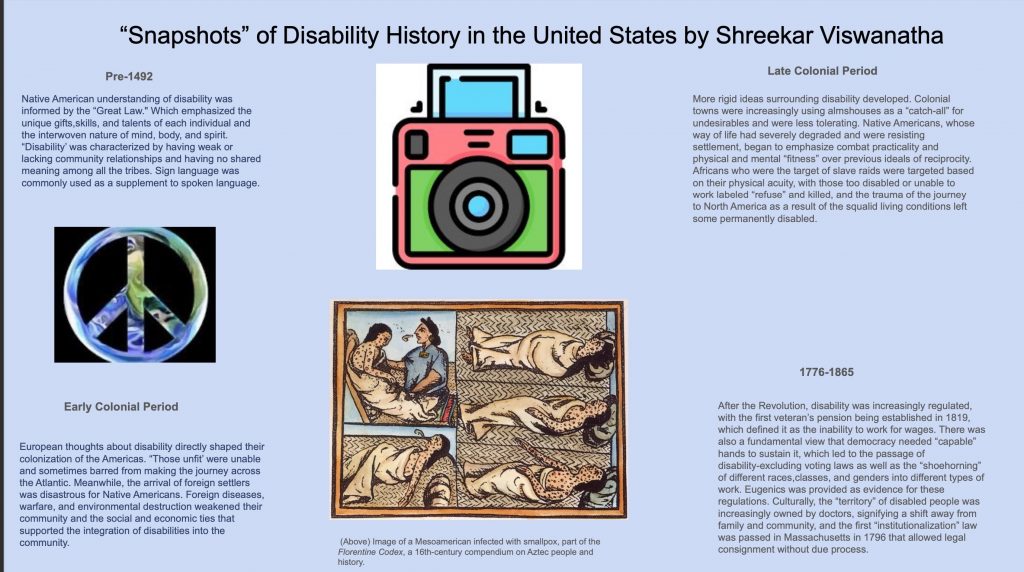
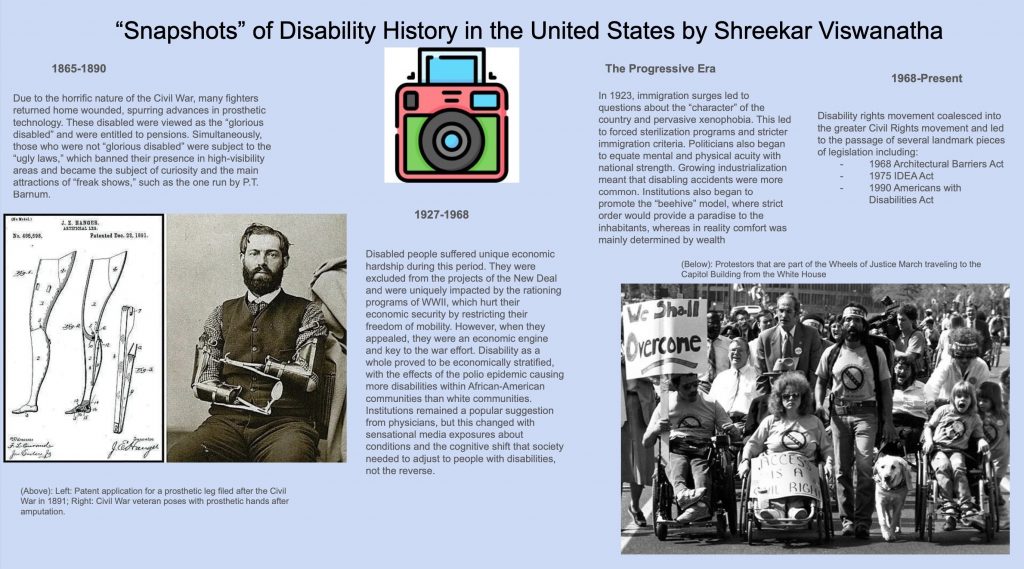
Snapshots of Disability History in the US by Shreekar Viswanatha
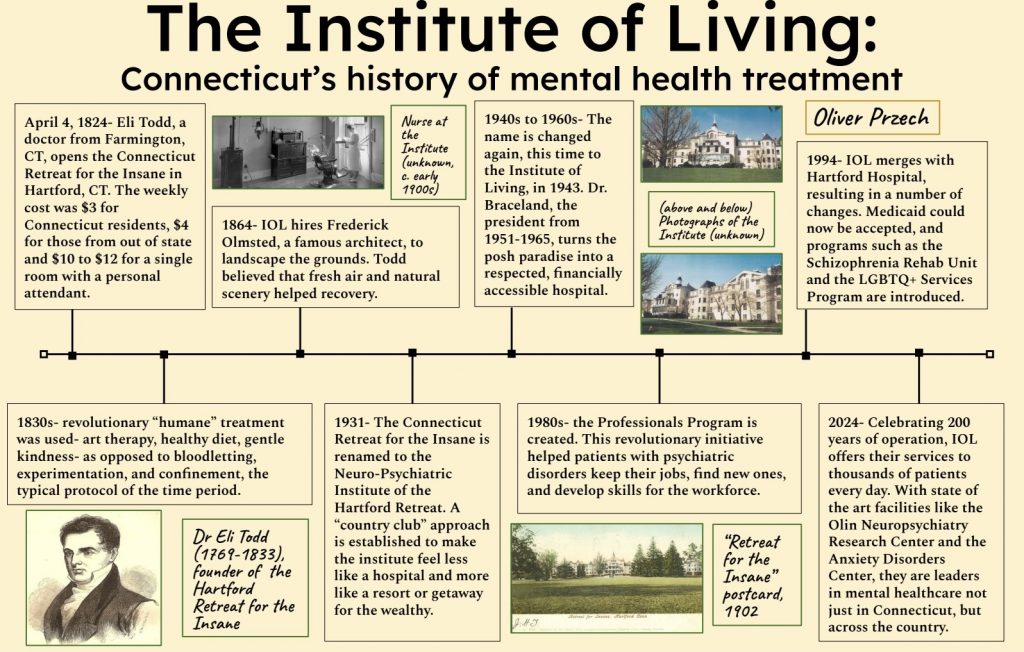
The Institute of Living: Connecticut’s History of Mental Health Treatment by Oliver Przech
Education
These posters focus on educational opportunities and barriers experienced by disabled individuals. Students highlight the importance of accessible learning environments and the historical development of disability education.
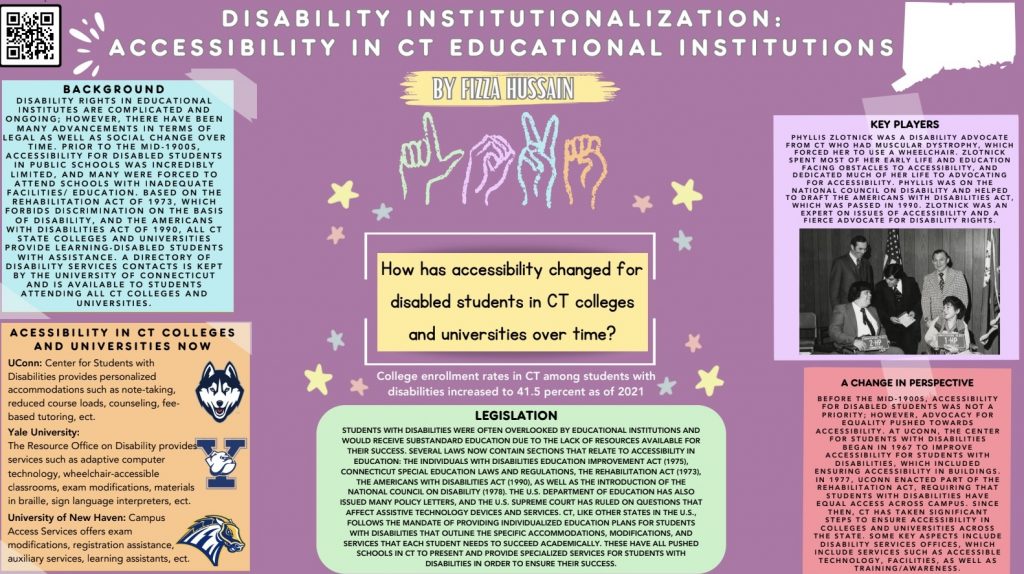
Disability Institutionalization: Accessibility in CT Educational Institutions by Fizza Hussain
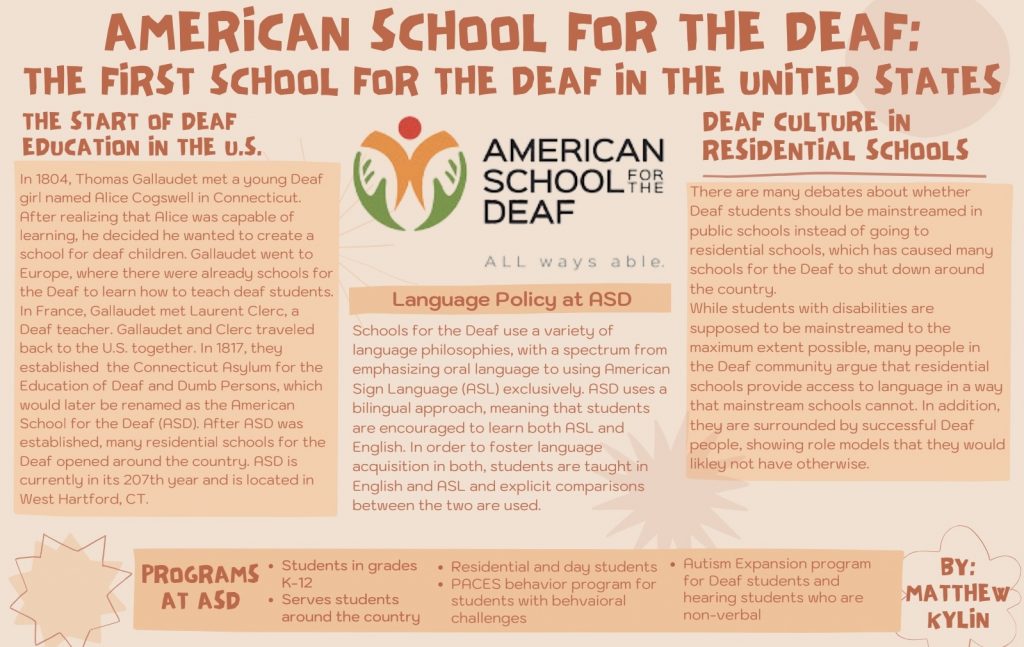
American School for the Deaf: The First School for the Deaf in the US by Matthew Kylin
Accessibility
Accessibility is a central theme throughout disability history. This poster examines efforts to create inclusive educational spaces and communities where disabled individuals could thrive and develop a sense of belonging.
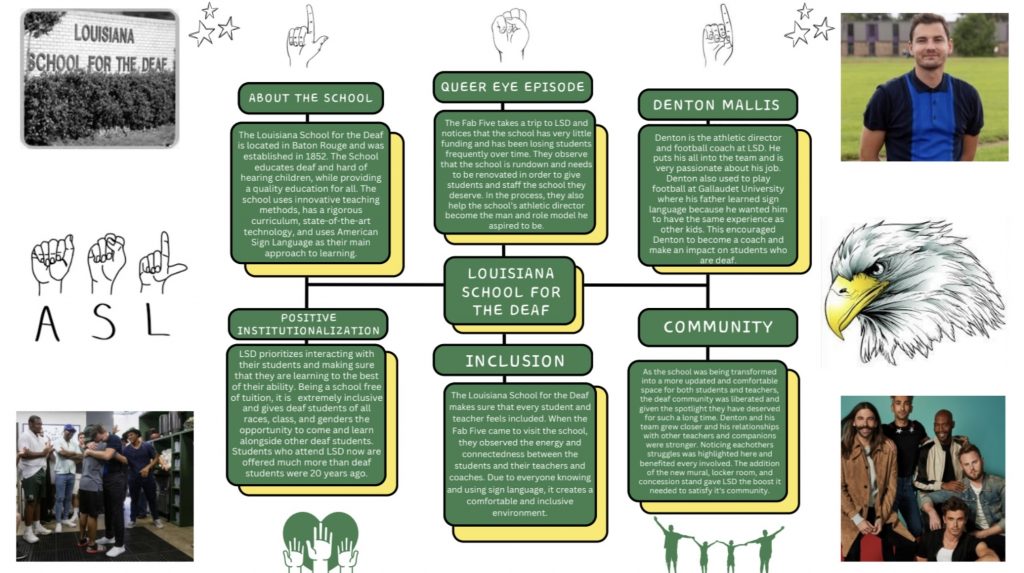
Louisiana School for the Deaf Institutionalization by Jessica Smith
Disabled Indigenous Community
This poster explore the intersections of disability, indigeneity, and institutionalization. It examines the impacts of colonization, discrimination, and cultural erasure on Indigenous disabled communities.
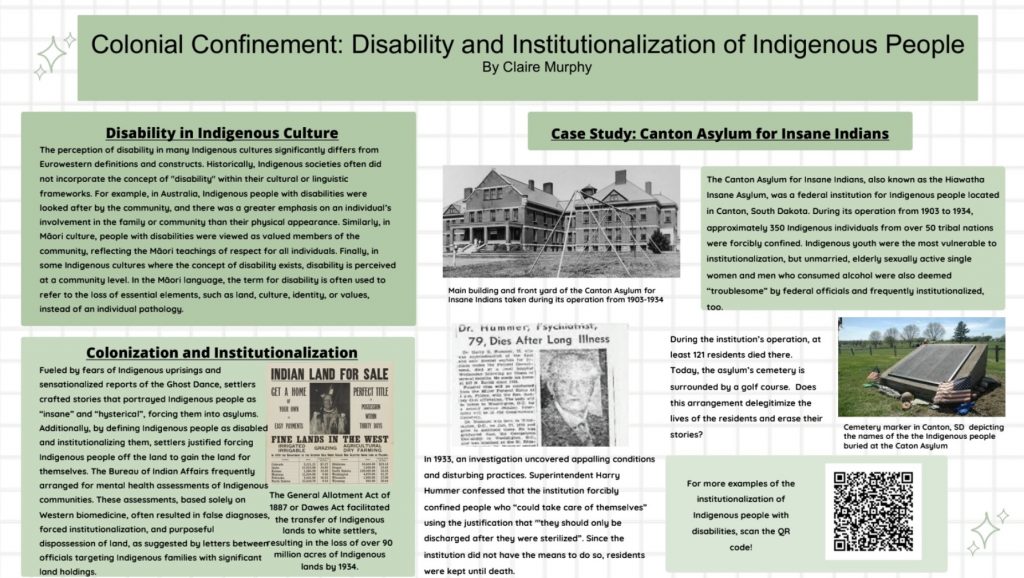
Colonial Confinement: Disability and Institutionalization of Indigenous People by Claire Murphy
Disabled Black American Community
This poster examines the experiences of Black disabled individuals within institutional systems and highlights the ways racism and ableism intersected throughout disability history.
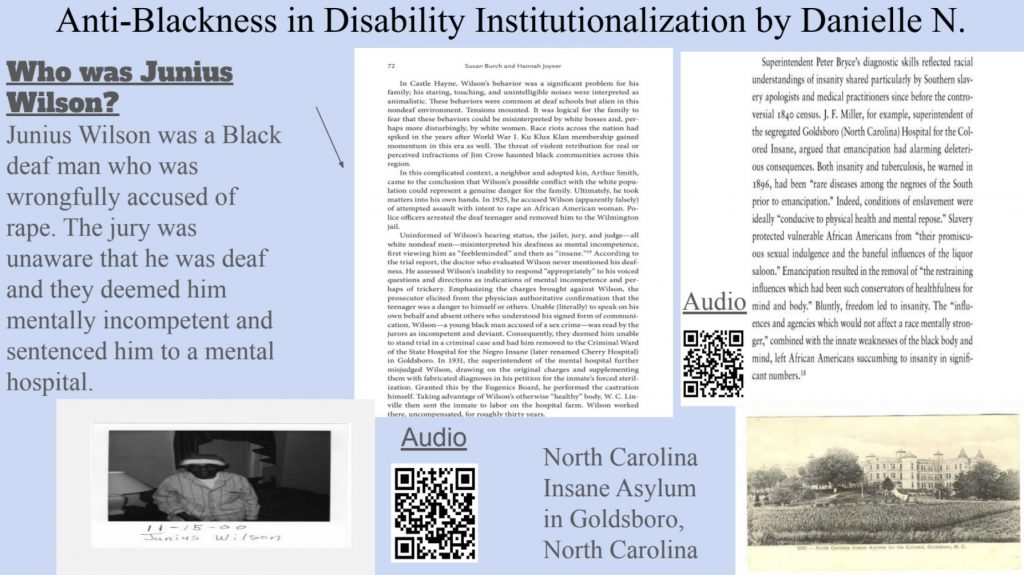
Anti-Blackness in Disability Institutionalization by Danielle N.
Personal Family Connections
These posters incorporate personal narratives and family experiences to illustrate how institutionalization affected both disabled individuals and their loved ones.
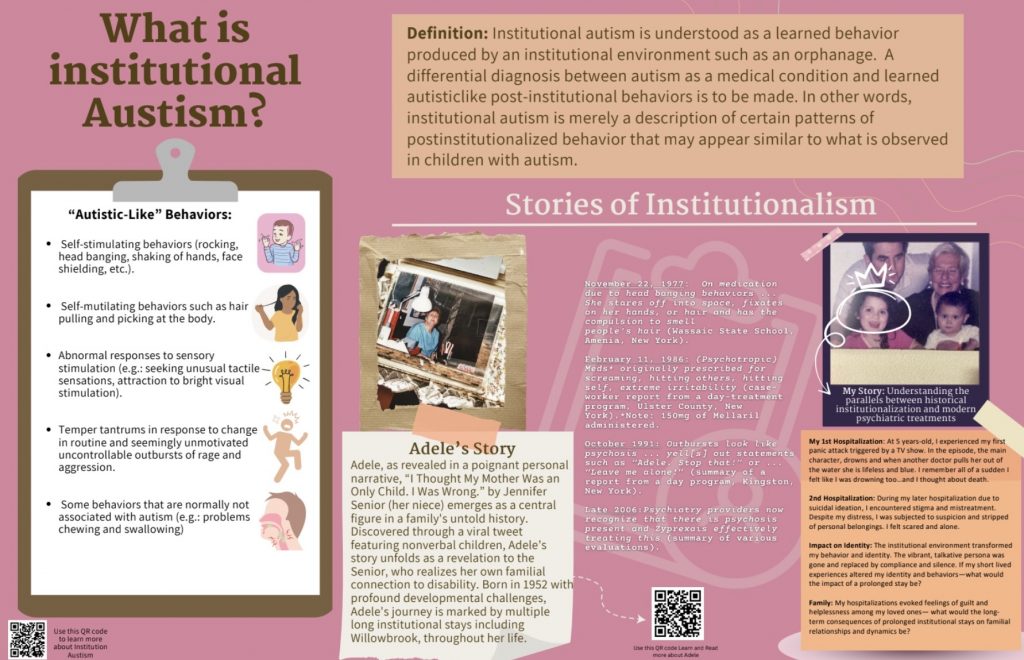
What is Institutional Autism? by Alexandra Papas
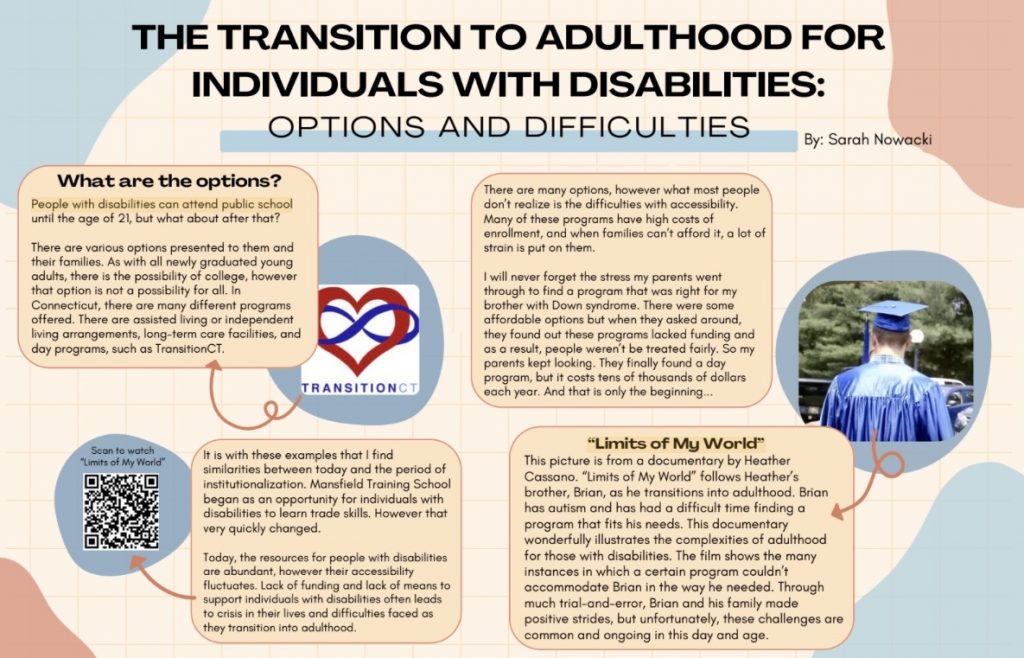
The Transition to Adulthood for Individuals with Disabilities: Options and Difficulties by Sarah Nowacki
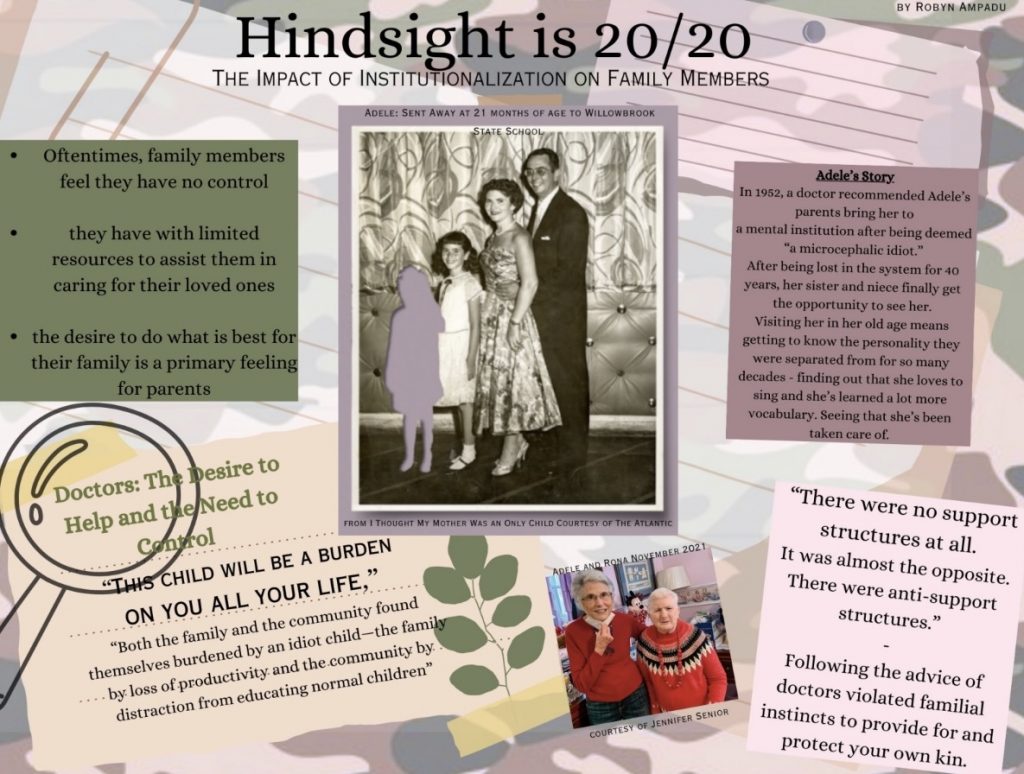
Hindsight is 2020: The Impact of Institutionalization on Family Members by Robyn Ampadu
Treatment of Children
The following posters examine the treatment of disabled children within institutions and the long-term consequences of institutionalization. The topics include restraints, educational practices, family separation, and childhood trauma.
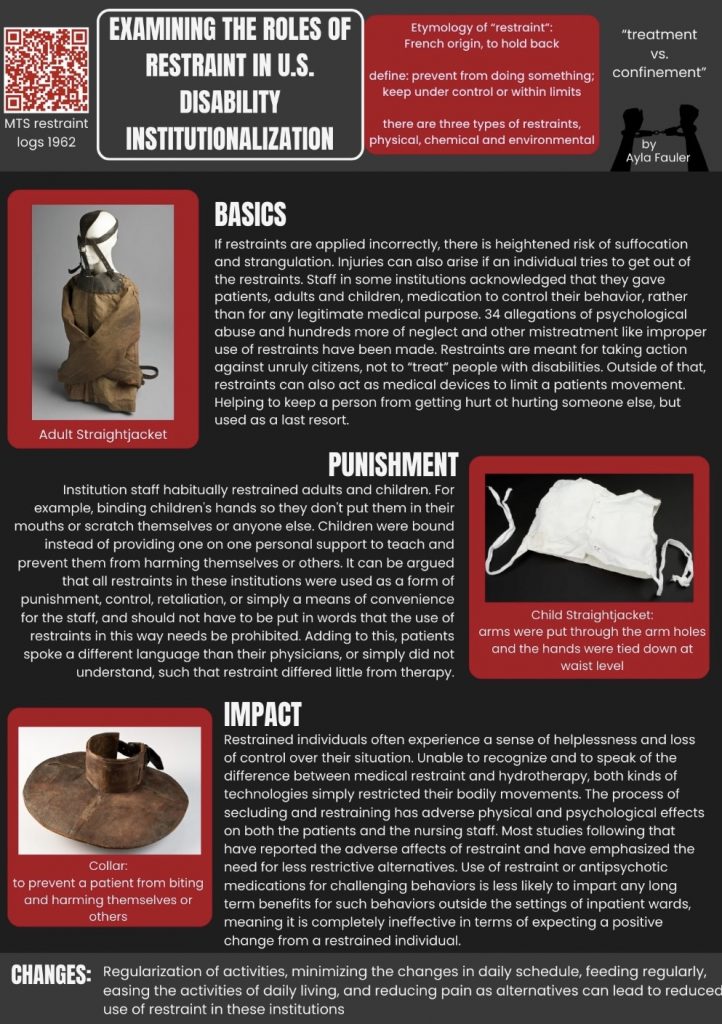
Examining the Roles of Restraint in U.S. Disability Institutionalization by Ayla Fauler
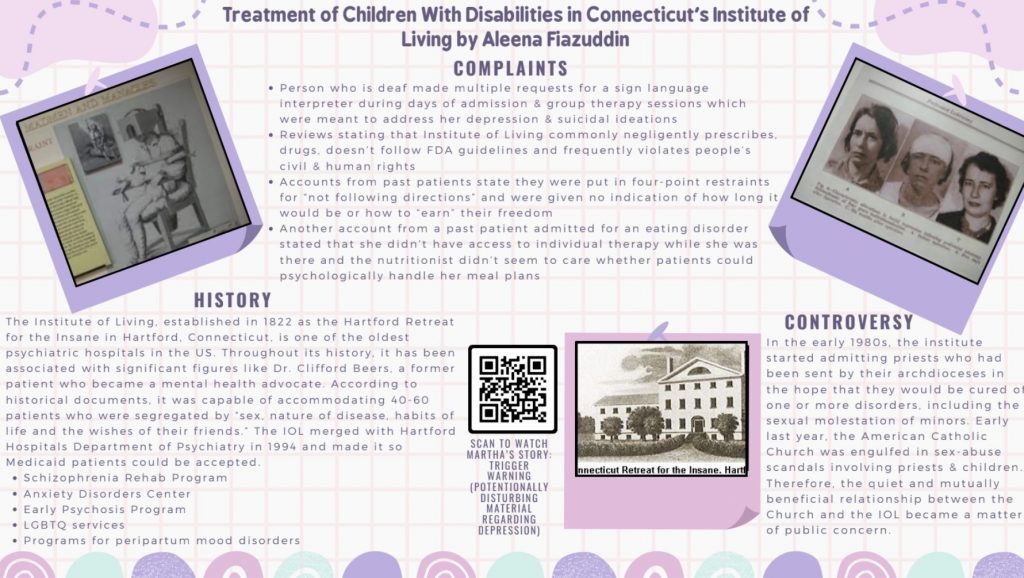
Treatment of Children With Disabilities in Connecticut’s Institute of Living by Aleena Fiazuddin
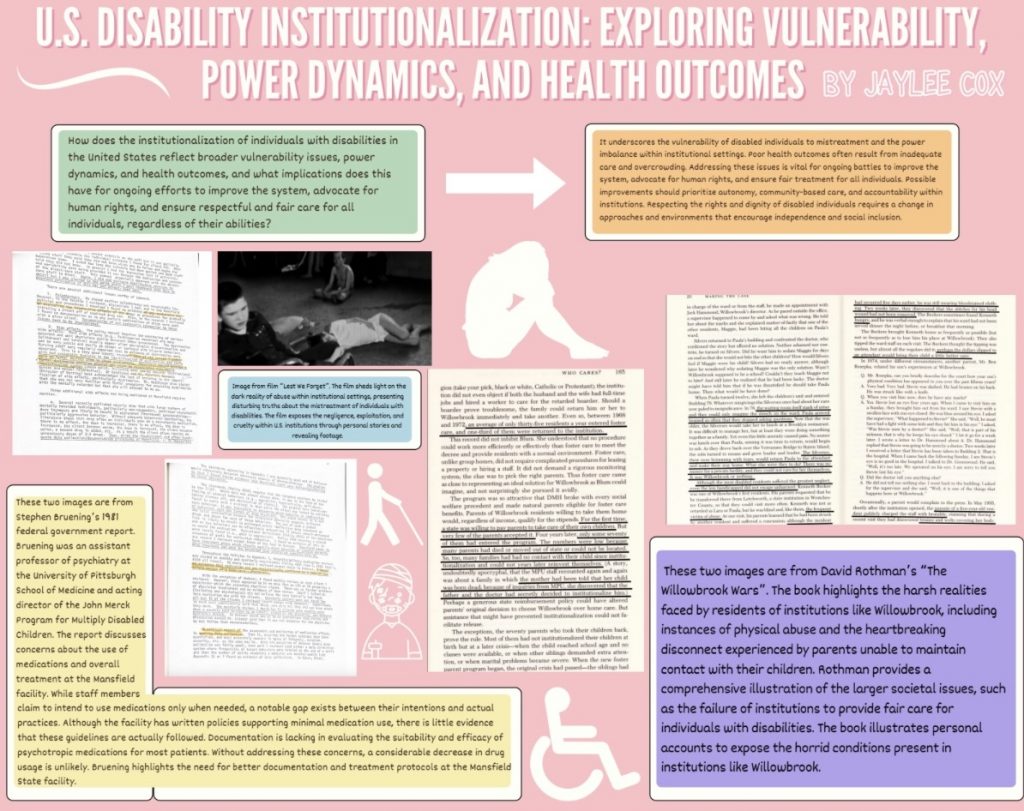
US Disability Institutionalization: Exploring Vulnerability, Power Dynamics, and Health Outcomes by Jaylee Cox
Historical Figures and Events
These posters introduce important individuals whose lives and work shaped disability history. From activists and educators to athletes and community leaders, these figures contributed to broader conversations about disability rights, education, and inclusion.
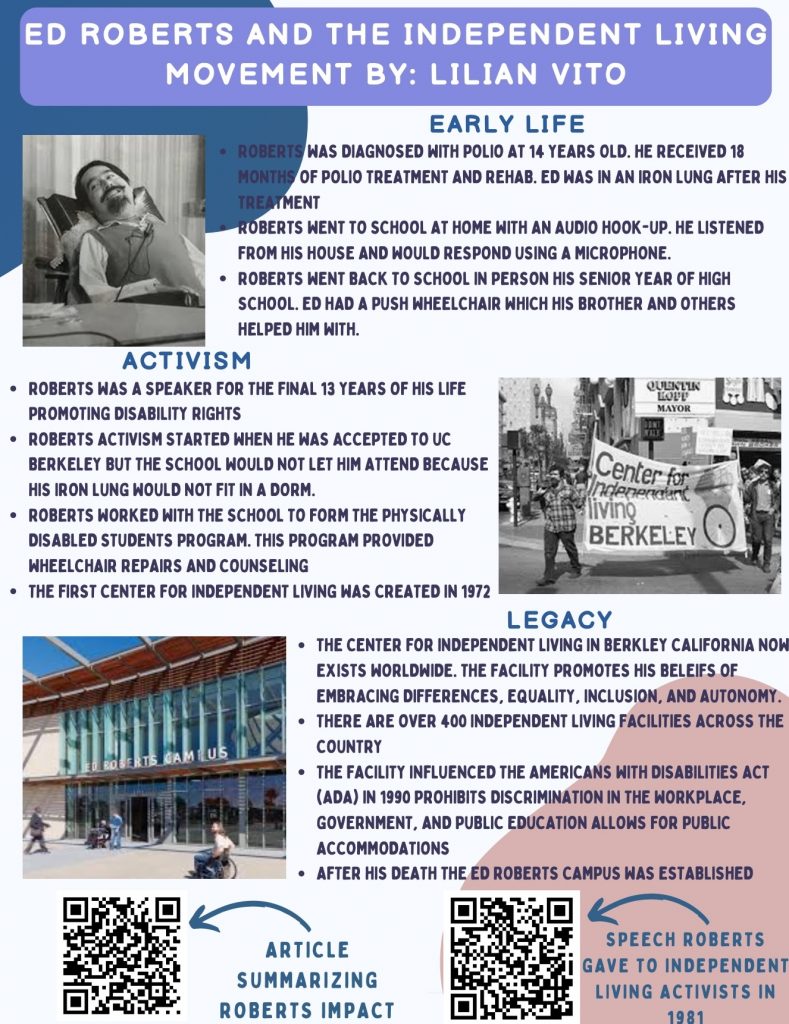
Ed Roberts and the Independent Living Movement by Lilian Vito
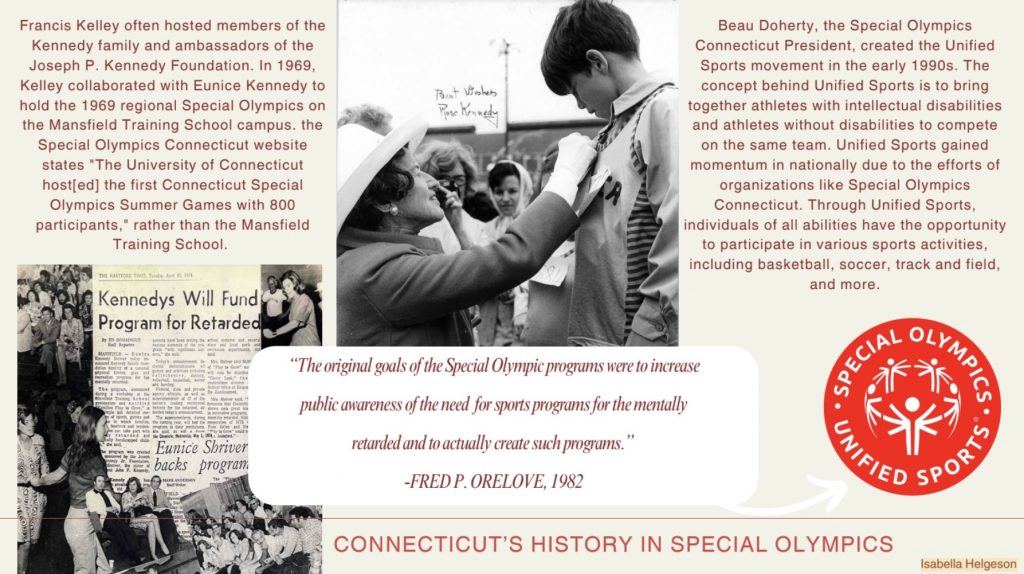
Connecticut’s History in Special Olympics by Isabella Helgeson
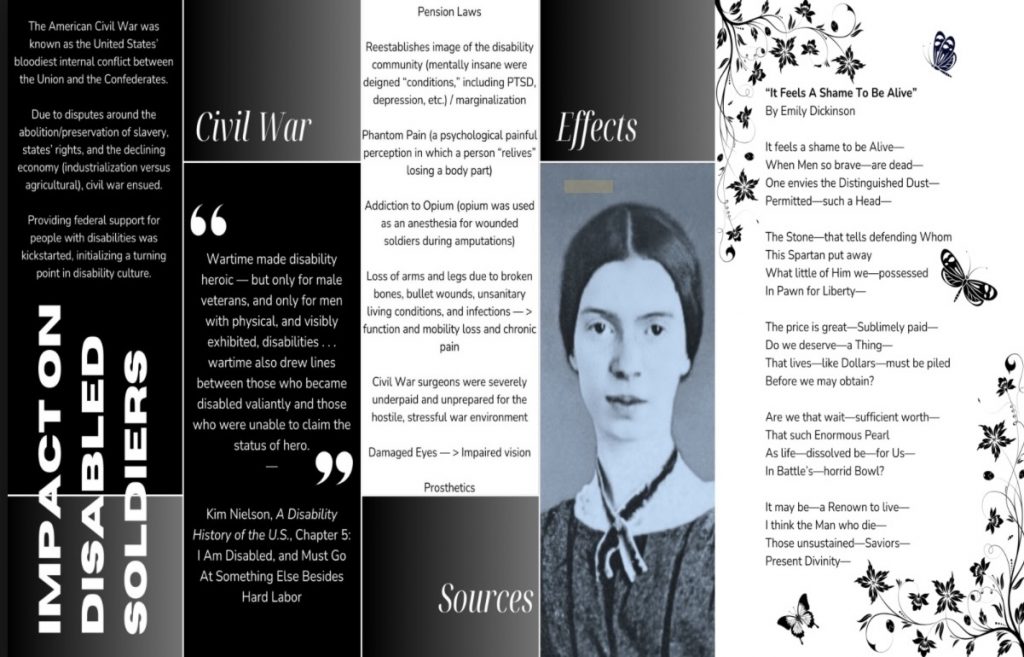
Impact on Disabled Soldiers by Hannah Dang
Historical Local Places
This poster focuses on programs in Connecticut that are connected to disability history and community development.
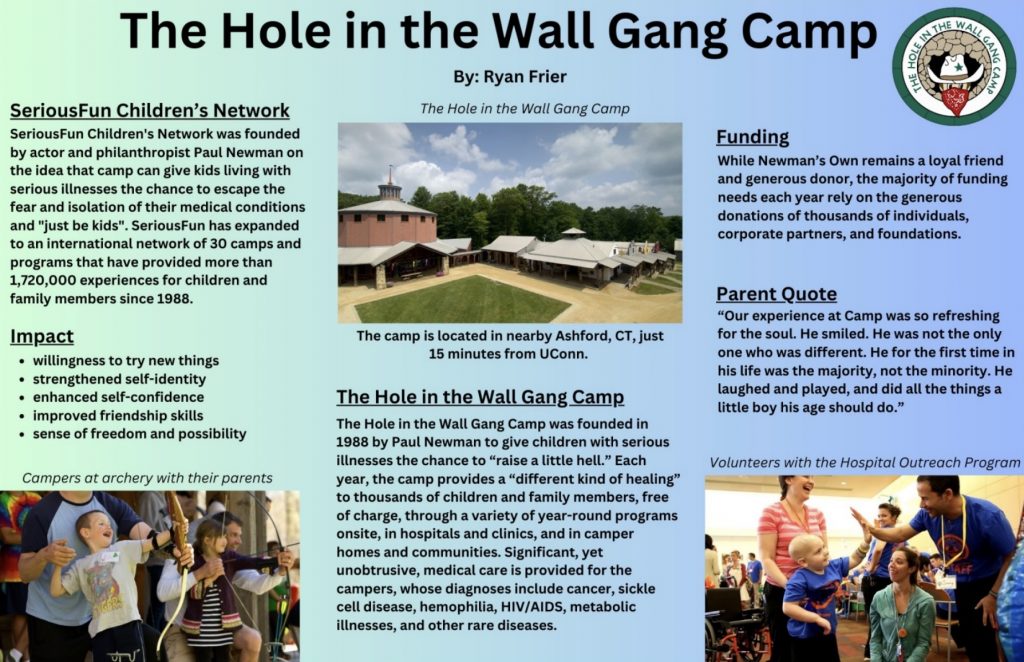
The Hole in the Wall Gang Camp by Ryan Frier