Written by Payton James, in collaboration with the 2026 Mansfield Training School Memorial and Museum Research Team. Questions or comments may be directed to paytonjames231@gmail.com.
Look through enough archival photographs and one detail recurs: a small black rectangle laid over someone’s eyes. The black bar has become shorthand for anonymity, so familiar that we rarely ask what it’s actually doing — whose privacy it protects, whose decision it was, and what it erases. I’ve been sitting with these questions while I consider how to ethically publish photographs of former Mansfield Training School residents. Many were children and nearly all of them had intellectual disabilities. But the more I looked at the black bar, the less straightforward it seemed.
No Photograph Is Neutral
Every photograph begins with a choice: someone decided to raise a camera, to capture that particular moment, and to imagine who might look at it. In an institutional setting photographs were taken to document living conditions, diagnoses, administrative files, and evidence of practice and procedure.
The institution decided what was worth photographing and why, while the people being photographed had little say in either. Now, decades later, I must decide how to preserve and present these images, making my judgments the latest decisions in a chain that began without the subject’s consent.
Where the Black Bar Came From
The black bar began as a practical fix in early print media, where publishers painted black ink directly over photographs. The black ink was fast, cheap, and easy to reproduce. Medical journals soon adopted the same procedure, routinely covering patients’ eyes in published photos (Slobogin, 2012). Through the years this technique became a standard practice and it was treated as a clear way to protect someone’s identity, despite evidence indicating otherwise (Preston et al., 2022). Today, this practice has been hardened into an ethical reflex, a small gesture that has come to signal that the archivist cares.
Why the Eyes?
Of all the features that could be hidden, why are eyes chosen? One reason the eyes are so significant is that humans are extraordinarily specialized at reading them. The eye region has been shown to convey attributes such as identity, emotion, attention, age, and social cues (Royer et al., 2018; Quinn & Wiese, 2023). The eyes’ role in communication makes concealing them particularly significant. If the eyes are a primary way humans read and respond to each other then covering them limits the ways viewers can understand and connect with people in photographs. Research also indicates that infants spend more time looking at the eyes than any other part of the face (Farroni et al., 2002). Human attention to the eyes begins remarkably early, suggesting that it is a fundamental part of how we engage with other people.
When a black bar covers the eyes, it does more than make a face less recognizable. Covering the eyes interrupts one of the primary ways that humans read another person’s identity, emotion, and expression. The feature chosen to hide someone’s identity happens to be the same feature through which we recognize and interpret others (Bruce & Young, 1986; Clover et al., 2010). But if the goal of the black bar is anonymity, how effective is it? Studies have found that people who are already familiar with an individual can often still recognize them even when their eyes are obscured (Clover et al., 2010). This evidence complicates the assumption that obscuring the eyes is enough to protect someone’s identity.
This section is not intended to suggest that covering the eyes is inherently unethical. But it is unlikely that the residents at Mansfield Training School provided meaningful consent to being photographed. Many were children, while others did not have the capacity to consent even if someone had asked them. The photographs capture people in vulnerable, exposed moments. If the original photographs were created without meaningful consent, altering them decades later is a thoughtful attempt at restoring some measure of control to the people pictured. In that sense, the black bar offers a straightforward ethical solution: if we cannot ask the subject what they would want, we can at least conceal their identity. However, that solution assumes that covering the eyes is undoubtedly protecting the person, and that their privacy is the highest priority.
A Firsthand Perspective
During a conversation about this question, Brenda, our project director, and Jim Bracken, a former Mansfield Training School administrator and employee, offered two perspectives.1 Brenda pointed out that the black bar can draw even more attention to the fact something is being hidden and, in doing so, strip a person of identity. Jim Bracken raised a different angle when he asked whether the institution itself may have had the legal grounds to consent to the photographs on behalf of the residents. But if that consent came from the institution rather than the people pictured, is that enough to justify leaving their identities uncovered today? Neither perspective settles the question, but they do illuminate how complicated these ethical decisions are.
What the Bar Costs Us
As I have established, the eyes are a key way of connecting with another person. Moreover, obscuring the eyes changes the photograph itself, reducing a viewer’s ability to empathize with the person they are looking at. The black bar also provides a level of comfort to the viewer; it creates distance between the viewer and the person in the photograph. That distance makes it easier to see the person as an anonymous figure rather than a human being. The bar protects the beholder from the full emotional weight of the image. This raises another question: these are people institutions had already reduced to diagnoses, case numbers, and administrative entries. Therefore, does covering their eyes continue that same erasure?
Considering the works of art below, what is lost when the subjects’ eyes are covered?

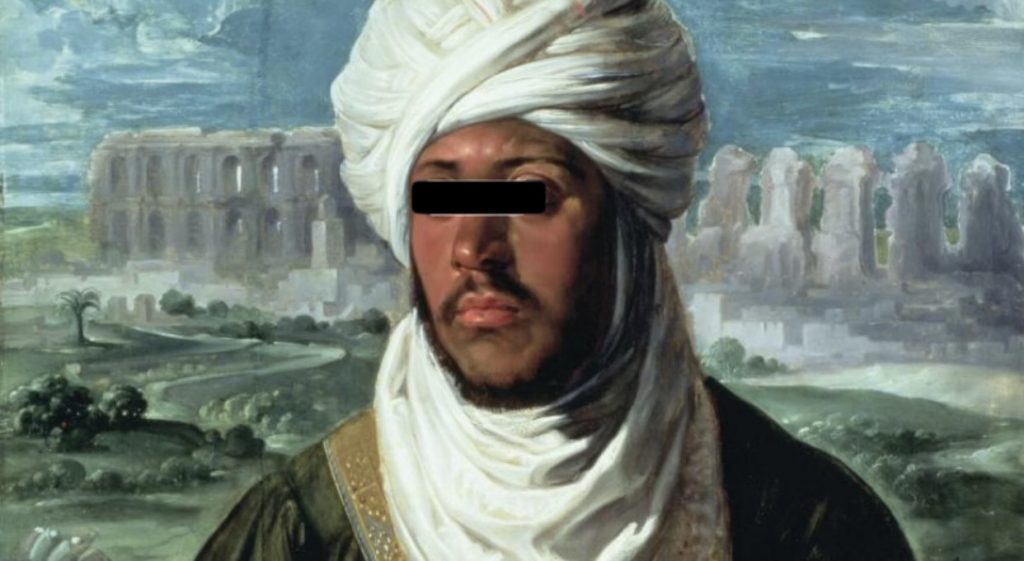
Mūlāy Ahmad — Peter Paul Rubens, circa 1609, oil on panel. Museum of Fine Arts, Boston, Massachusetts / M. Theresa Hopkins Fund / The Bridgeman Art Library.
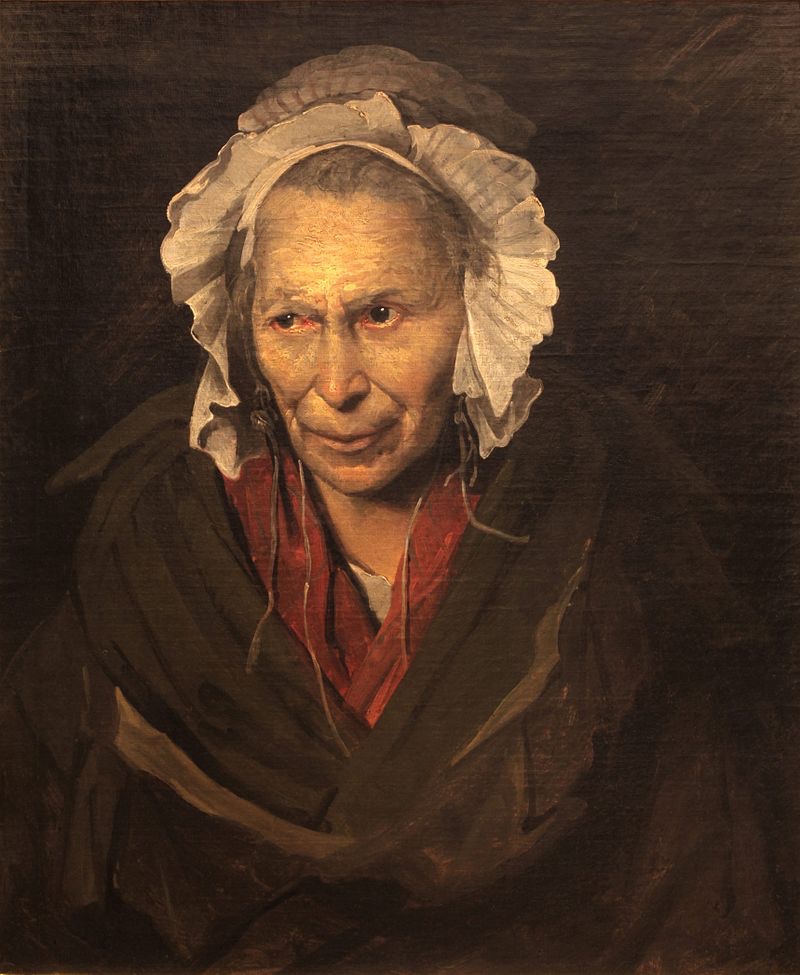
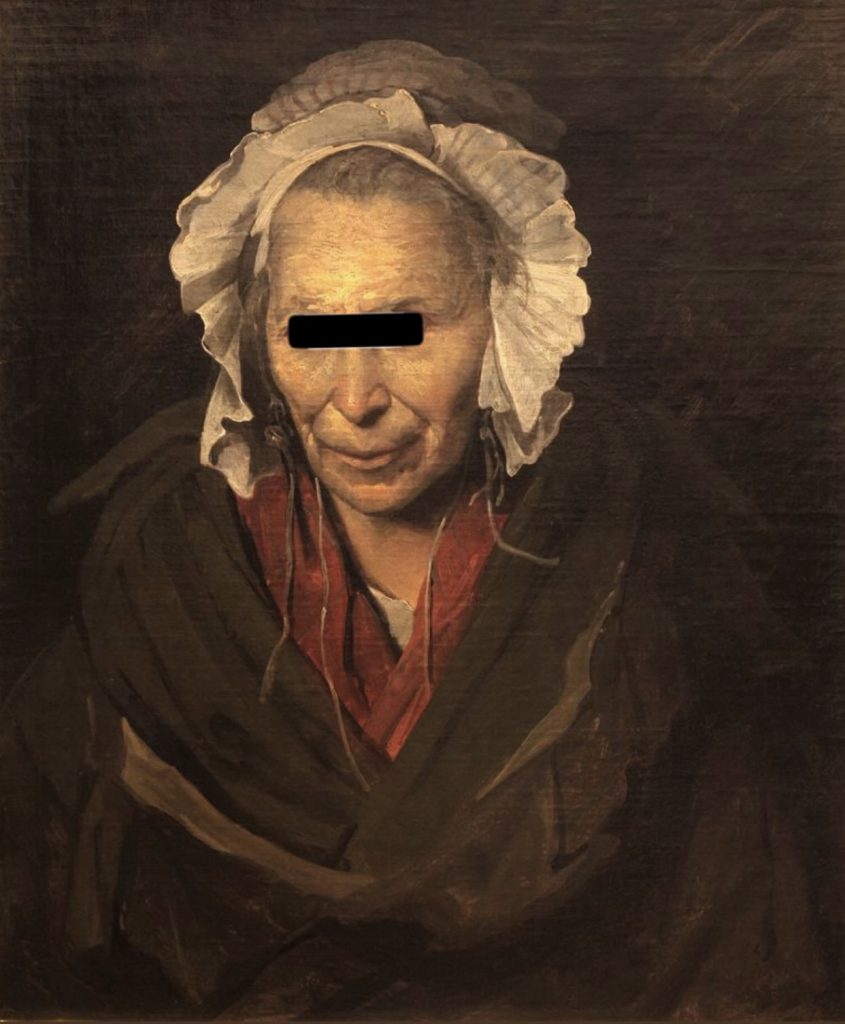
La Monomane de l’envie (Insane Woman) — Théodore Géricault, 1822. Courtesy of the Museum of Fine Arts of Lyon.
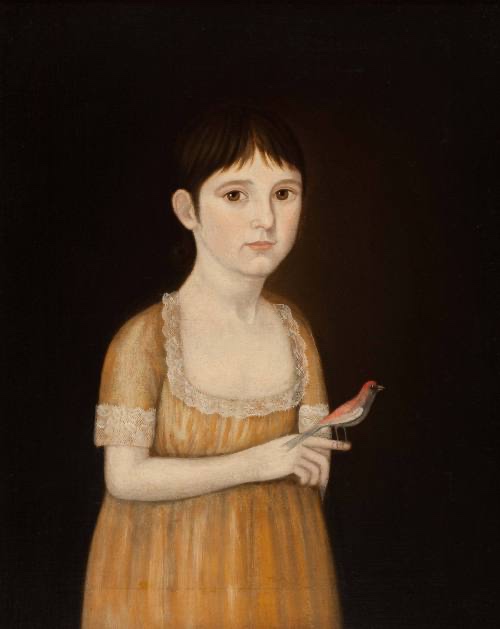
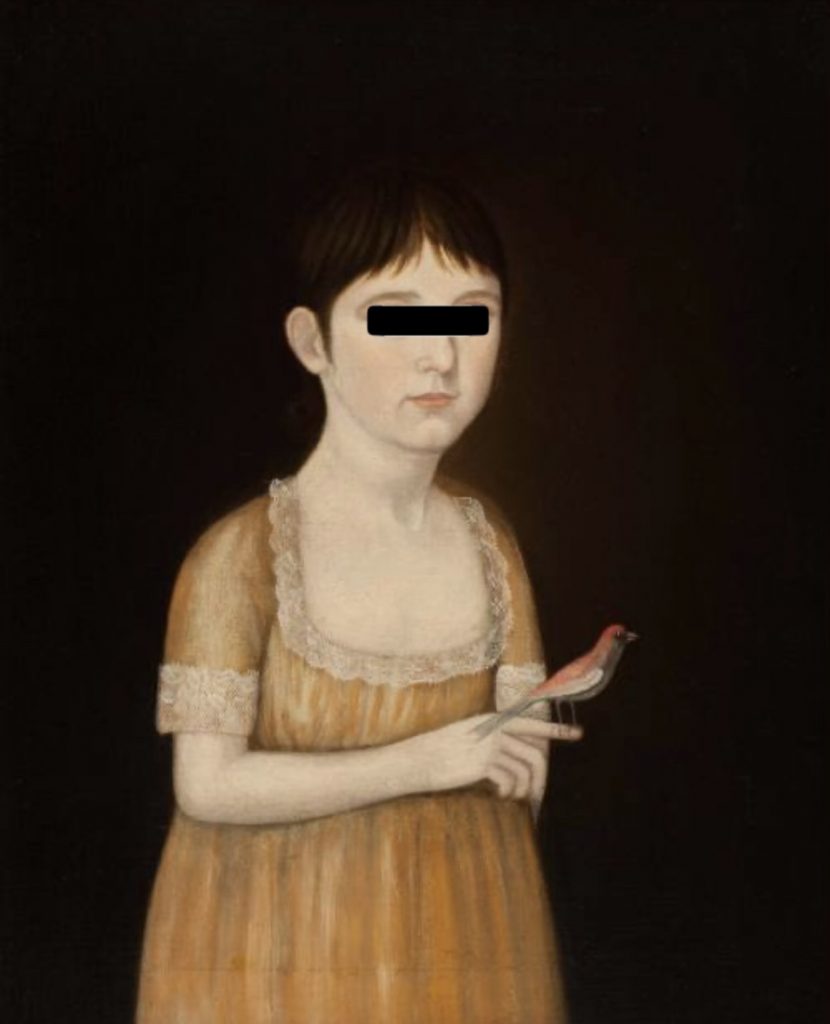
Portrait of a Girl with a Bird — John Brewster Jr., Portrait of a Girl with a Bird (Mary Ann Patten Munson).
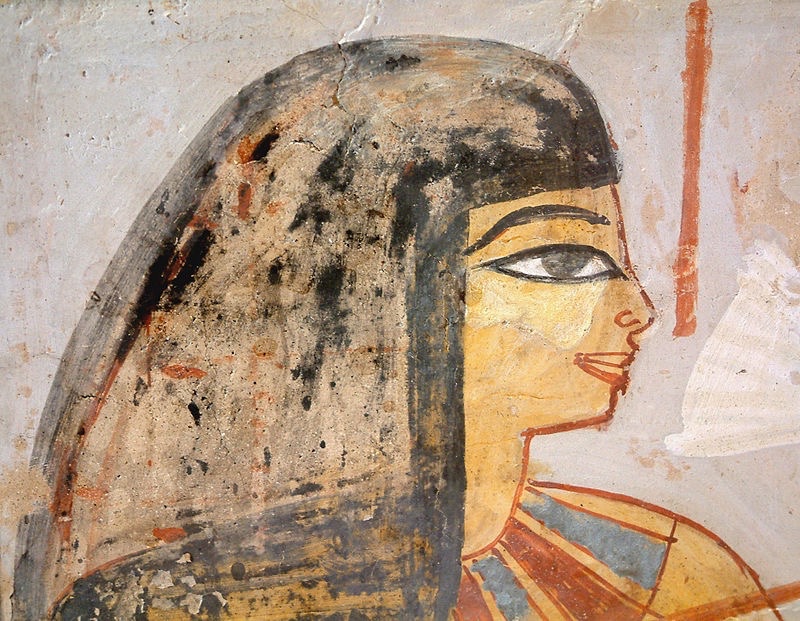
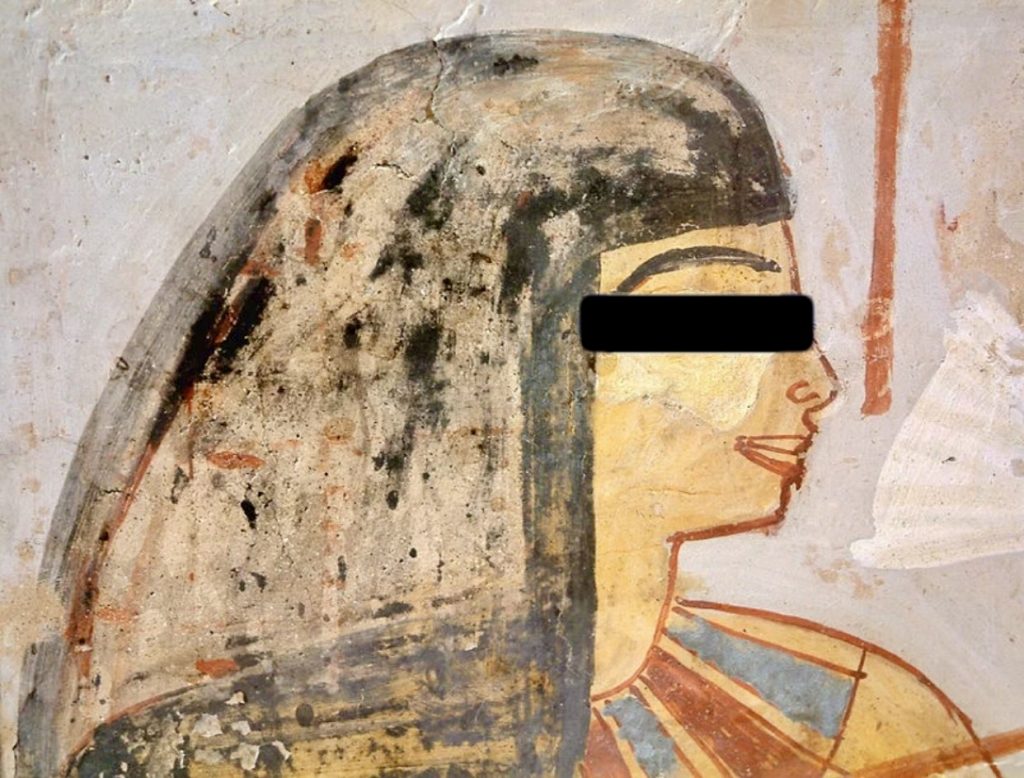
Fragment of a Tomb Decoration: Woman at a Ceremony — Anonymous, reign of Thutmose IV or Amenhotep III. Fragment de la décoration d’une tombe : femme à une cérémonie.
Footnotes
- Excerpt from a project discussion between Brenda Brueggemann, project director, and Jim Bracken, a former Mansfield Training School administrator and employee:
You know, I think one… one of the things to say now, though, that people point out, in some ways it just calls attention to the thing even more, you know? And, in, and there’s a way, just like the “kids,” it kind of strips someone of an identity. And it’s… and that’s actually like, neuroscience has proven, I mean, the eyes are a key feature to… not scientifically, but how people recognize humans, is through their eyes. Um, anyway, so thanks for answering that one, too.
JIM: I don’t know if I fully have, because I don’t remember those black strips being used, but I know what they are. At least not by us.
BRENDA: I didn’t see them, but since I have a press that’s hounding me, really, you know, to do this book, I… it’s definitely a thing I have to think about, you know? Um…
JIM: Well, you’re going to remember that if you’re doing a book about most people, they’re not going to be children that you would have needed consent for. They’re going to be… they’re going to be adults.
BRENDA: Yeah.
JIM: And chances are the institution may have been able to give consent.
↩︎
References
Bruce, V., & Young, A. (1986). Understanding face recognition. British Journal of Psychology, 77(3), 305–327. https://doi.org/10.1111/j.2044-8295.1986.tb02199.x
Clover, A. J., Fitzpatrick, E., & Healy, C. (2010). Analysis of methods of providing anonymity in facial photographs: A randomised controlled study. Irish Medical Journal, 103(8), 243–245.
Farroni, T., Csibra, G., Simion, F., & Johnson, M. H. (2002). Eye contact detection in humans from birth. Proceedings of the National Academy of Sciences, 99(14), 9602–9605. https://doi.org/10.1073/pnas.152159999
Preston, F. G., Meng, Y., Zheng, Y., Hsuan, J., Hamill, K. J., & McCormick, A. G. (2022). Informed consent in facial photograph publishing: A cross-sectional pilot study to determine the effectiveness of deidentification methods. Journal of Empirical Research on Human Research Ethics, 17(3), 373–381. https://doi.org/10.1177/15562646221075459
Quinn, B. P., & Wiese, H. (2023). The role of the eye region for familiar face recognition. Quarterly Journal of Experimental Psychology, 76(2), 338–349. https://doi.org/10.1177/17470218221085990
Royer, J., Blais, C., Charbonneau, I., Déry, K., Tardif, J., Duchaine, B., Gosselin, F., & Fiset, D. (2018). Greater reliance on the eye region predicts better face recognition ability. Cognition, 181, 12–20. https://doi.org/10.1016/j.cognition.2018.08.004
Slobogin, C. (2012). Hidden in plain sight: The covering of patients’ eyes and a microethics of medical photography. Medical Humanities, 38(2), 76–82. https://doi.org/10.1136/medhum-2012-010234